Visit Sponsor

Written by 20:01 Latest Article

What Is Formal Export Declaration and Import Customs Clearance in International Shipping?

Formal Export Declaration

Formal export declaration means that the exporter declares the shipment under its own registered company name and completes the export customs declaration through the official customs procedures.

The exporter is generally required to provide the following documents:

  • Packing List
  • Commercial Invoice
  • Sales Contract
  • Export Customs Declaration Form
  • Customs Clearance Documents for goods subject to inspection (if applicable)
  • Brand Authorization Letter for trademarked products (if applicable)

For goods eligible for export tax rebates, the relevant documents must bear the official company stamp or a legally accepted electronic company seal.

The Export Customs Declaration Form is prepared by entering the shipment information into the Export Goods Declaration Form of the Customs of the People’s Republic of China, after which the completed declaration can be generated and submitted electronically to China Customs.

After preparing all the required documents, the exporter logs into the China International Trade Single Window and submits an Entrusted Customs Declaration Authorization to authorize the customs broker.

Once the authorization is completed, DJcargo can officially lodge the export customs declaration on behalf of the exporter under the exporter’s registered company name.

After the customs declaration is completed, China Customs issues an Export Customs Declaration Receipt (Declaration Release Receipt). This document can be used by the exporter for
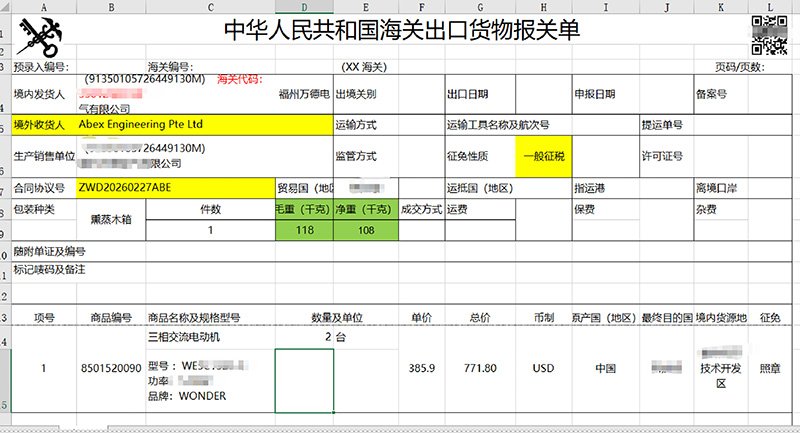
export declaration form

This method is what we refer to as a formal export declaration, meaning that the shipment is declared to China Customs under the exporter’s own registered company name.

It is important to understand that this does not mean there are “formal” and “informal” customs declarations. Under Chinese customs regulations, all export shipments must be declared to Customs.

Another commonly used declaration method is buying customs declaration services (commonly known in China as Mai Dan Bao Guan or “Buying Customs Declaration”). Under this arrangement, the shipment is declared under the name of a qualified third-party exporter rather than under the actual manufacturer, exporter, or individual shipper.

Therefore, the term “Formal Export Declaration” in this article simply refers to customs declarations made under the exporter’s own company name with its own export documentation. It should not be interpreted as implying that other declaration methods are unofficial or illegal. They are simply different customs declaration arrangements used for different business situations.
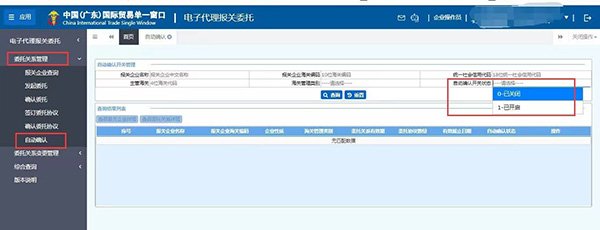
entrust form

What Is Formal Import Customs Clearance?

Once the shipment arrives in the destination country, it must also go through import customs clearance. In the logistics industry, this process is commonly referred to as customs clearance.

A Formal Import Customs Clearance means that the shipment is imported and declared under the actual importer’sregistered company name or personal identity, rather than under a third party.

In most cases, importers do not complete the customs clearance process themselves. Instead, they authorize a local customs broker, freight forwarder, or logistics company in the destination country to handle the customs declaration on their behalf.

Depending on the destination country’s customs regulations, the importer may be required to provide documents and information such as:

  • Company name (or personal identity details)
  • Company registration number
  • Tax Identification Number (TIN) or tax registration number
  • Import permit or import license (if required)
  • Import quota (if applicable)
  • Authorization letter or Power of Attorney (if required)
  • Other documents required by local customs authorities

The required documents vary from country to country and depend on the type of goods being imported.

After receiving the necessary information, the local customs broker submits the import customs declaration under the actual importer’s company or personal name. Any import duties, taxes, customs fees, or government charges are normally billed according to the official amounts assessed by the destination country’s customs authorities, with supporting documentation provided.

What Does “Formal Customs Clearance” Mean?

The term Formal Import Customs Clearance simply means that the customs declaration is made using the actual importer’s identity and legal import qualifications.

It does not imply that there is an “informal” customs clearance process. All imported goods must be declared to customs in accordance with the laws and regulations of the destination country. The term is commonly used in the logistics industry to distinguish clearance under the actual importer from other import arrangements that may be available in certain countries or specific business scenarios.

Are There Alternatives to Formal Import Customs Clearance?

Yes. In some countries and trade lanes, there are alternative import arrangements that do not use the actual importer’s company or personal identity for customs clearance.

In the Chinese logistics industry, this type of arrangement is commonly referred to as Grey Customs Clearance. It is an industry term rather than an official customs term.

Under this arrangement, the local customs broker or import agent completes the import customs declaration using the name and import qualifications of another legally registered importer, instead of the actual consignee. Import duties, taxes, and customs clearance fees are still paid according to the applicable customs regulations.

Once Customs releases the shipment, the goods are collected and delivered to the final consignee designated by the logistics provider.

It is important to note that the availability and legality of this type of import arrangement vary from country to country. Import regulations differ significantly, and businesses should ensure that their import procedures comply with the laws and customs requirements of the destination country.

Close